We'd love to hear about your experiences! Please share your stories and photos of tree
growing, ecosystem conservation, protection, and restoration with us, and we may feature them on our social media pages. [email protected] |
Reflections of Rob Dawes - Executive Director, Anglican Alliance The Communion Forest is facilitated by the Anglican Alliance and the Anglican Communion Environmental Network (ACEN), with the support of an advisory group drawn from across the Communion. |
Help fund The Communion Forest We are inviting you to donate and
partner with us to achieve our vision of being the world's most geographically widespread and biologically diverse initiative on the planet by deepening the life of care for creation in the life of the church. We will achieve this by working with Indigenous People and the Youth through projects and programs for capacity building. Your donation will support these efforts. End-of-Year ReflectionBy Rev. Canon. Dr. Rachel Mash "Jesus came and pitched his tent with us, he moved into the neighbourhood." (John 1.14). This is
the basis of Christian discipleship—that Jesus pitched his tent with us; we walk with Jesus and he walks with us. This also shows us that the world is not evil—it is good, for Jesus was born as a human being, in this world – he came to be within it and sanctify it. And so we are also called to be present in the world – not just praising God inside our churches, but moving with the renewing power of God
into the world, restoring degraded eco-systems, protecting old forests, planting and caring for trees. This is God’s beautiful creation and we are called to act for the renewal of Creation. Immanuel! God is with us! Post COP30 ReflectionsBy Dr. Elizabeth Perry As Jesus contemplated the future destruction of the temple in Matthew 24:12, he told his disciples, “Because of the increase of wickedness, the love of many will grow cold”. Jesus knew how discouraged we can become - that when it seems evil has the upper hand, when we
see the destruction of what we love - that empathy can decline and apathy increase. It’s easy to look at the state of the world today and be discouraged. But we cannot afford to lose our spark. Together, with one another and with the fire of God’s Spirit, we can - we must - keep our love burning fiercely. And there are reasons to be encouraged… - Despite the setbacks and disappointments of the COP in Brazil, the frustrated and angry nations did not walk away – they chose multilateralism; they chose to keep the process alive.
- The agreement itself, though deplorably watered down in its final text, holds
the line on some essentials like the primacy of IPCC science, the 1.5°C temperature ceiling and the continued expectation that countries must implement their nationally determined contributions.
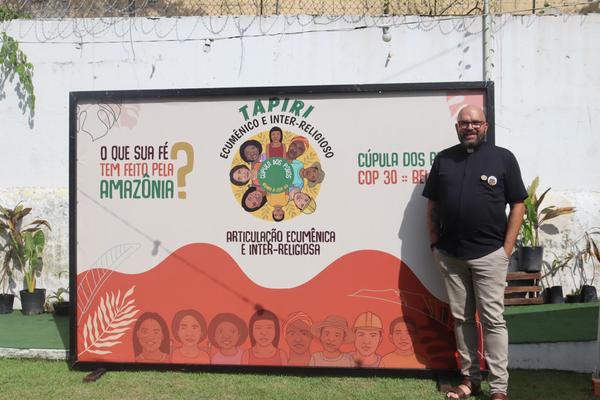
COP30 and TAPIRIBy Rev. Dr. Rodrigo Espiuca Photo credits - Paulo Ueti During COP30, Dr. Rodrigo worked alongside Indigenous leaders, quilombola communities, youth networks,
ecumenical partners and global Anglican companions, helping weave a narrative in which safeguarding creation is inseparable from safeguarding dignity. One of his deepest convictions shaped his engagement: Indigenous peoples must not stand at the margins of global climate negotiations. He explained, “Indigenous voices are not optional; they are essential for safeguarding creation, because they speak from ancient relationships with the land that the world urgently needs to
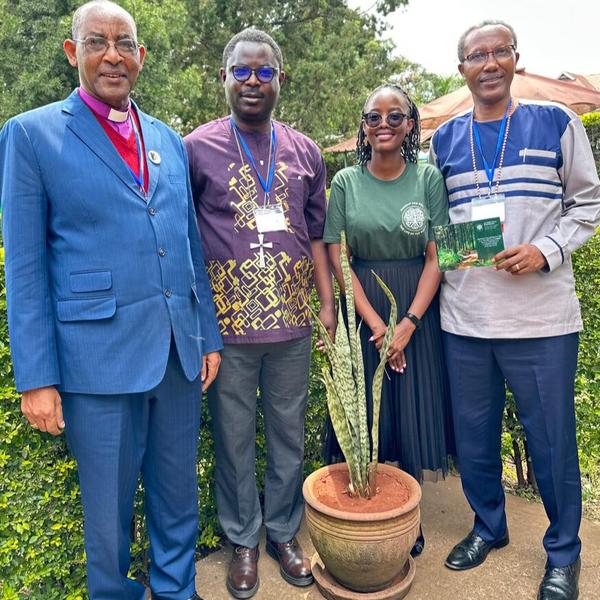
honour.” Communion Forest at the Francophone Bishops GatheringBy Irene Sebastian-Waweru Left to right - Bishop Eraste Bigirimana (Burundi), Bishop Berin Subi (DRC), Irene Sebastian-Waweru (Communion Forest) and Bishop Seth Ndayirukiye (Burundi) On September 9, 2025,
members of The Communion Forest team—Africa Region Facilitator Irene Sebastian-Waweru and Global Facilitator Nicholas Pande—had the opportunity to present the initiative to Francophone Bishops during a gathering of bishops and their spouses in Nairobi. The meeting served as a vital platform for the Bishops to learn about The Communion Forest and the transformative potential it offers for creation stewardship within their provinces, dioceses, and the lives of Christians. In turn, the team was
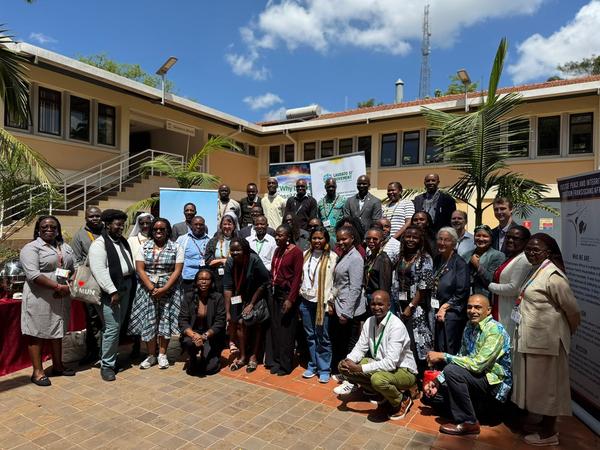
deeply encouraged by stories of the impactful environmental work already being carried out by bishops in regions such as Cairo, Burundi, the DRC, and Madagascar. Anglicans advocate for the lungs of the earth at the United Nations Environment Assembly (UNEA7)By Nicholas Pande Faith communities gather at the United Nations Environment Assembly in Nairobi. Anglican representatives attended the United Nations Environment Assembly (UNEA-7) in Nairobi, the world’s highest-level decision-making body on environmental issues. Running from 8-12 December, the Assembly’s theme was: Advancing sustainable solutions for a
resilient planet. The conference also marked the 10th anniversary of the Paris Agreement, which aims to limit global temperature rise to 1.5 degrees Celsius above pre-industrial levels. Continuing under the banner of the Lungs of the Earth call to advocacy and action that ran throughout COP30 in November 2025, Anglicans persevere in
supporting these vital ecosystems at UNEA. The Anglican delegation consisted of the Revd Dr Rachel Mash (Coordinator for the Anglican Communion Environment Network, Environmental Coordinator for the Anglican Church of Southern Africa and the Green Anglicans Movement), Nicholas Pande (Environmental Advocacy lead for the Anglican Communion UN and Advocacy team, Global Coordinator for the Communion Forest and member of the Anglican Church of Kenya), Grace Maghanga (a youth advocate
from the Anglican Church of Kenya) and Fredrick Odinga (National Environmental Coordinator for Anglican Development Services in Kenya and member of the Anglican Church of Kenya). Let us PrayBy Dr. Elizabeth Perry |
|